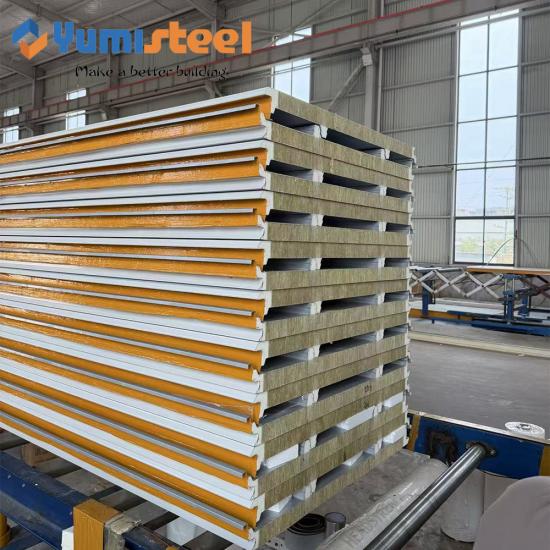

When designing and constructing modern industrial buildings, metal roofing and sandwich roof panels are two of the most widely specified roofing systems. While both leverage durable metal exterior faces to withstand harsh environmental conditions, they differ fundamentally in their engineered design, thermal performance, and installation methodology. Choosing the ideal solution requires balancing a project's upfront construction capital against its long-term operational energy costs and internal climate control guidelines.
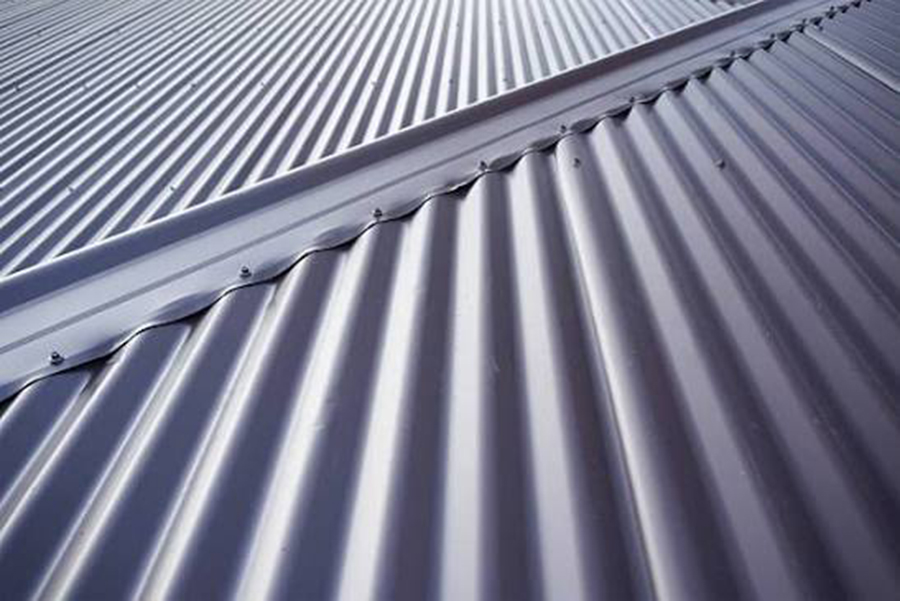
Metal roofing is a lightweight and weatherproof single-layer roof system composed of thin corrugated or standing-seam sheets of galvanized steel, aluminum, or zinc alloy, which are fastened directly to steel purlins and primarily used in industrial buildings. Because single-layer metal lacks inherent thermal insulation and acoustic properties, installers must manually place vapor barriers, fiberglass wool, or rigid insulation boards beneath the metal sheets during on-site construction to provide proper heat and moisture control.
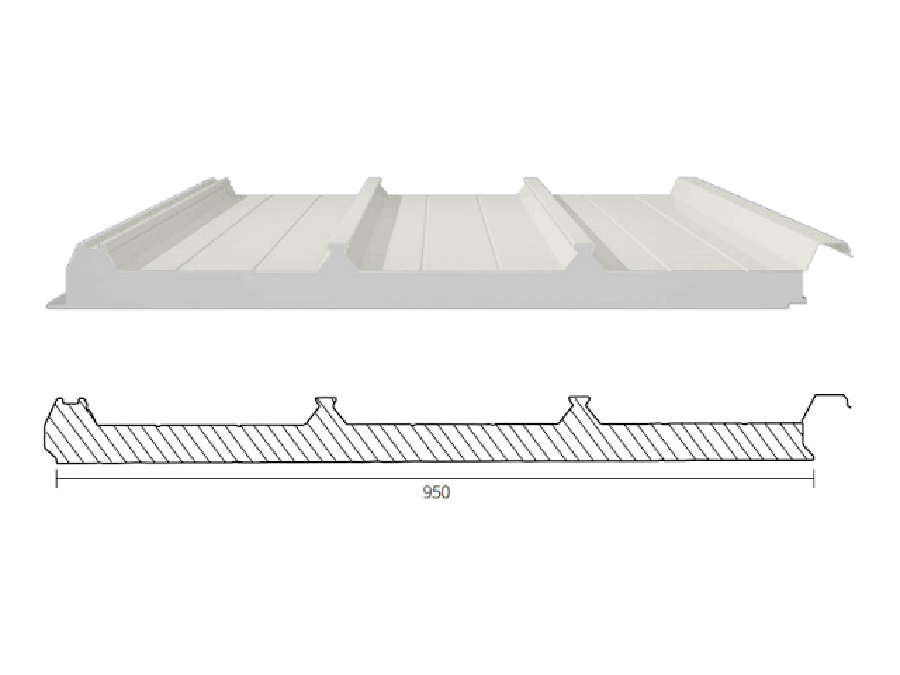
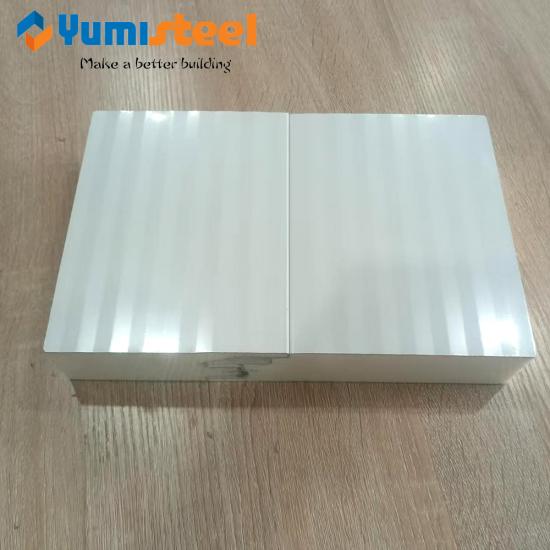
A sandwich roof panel or Insulated Metal Panel (IMP) is a factory-prefabricated composite material that combines structure, insulation, and interior finish into one unit. It features three bonded layers consisting of a metal outer skin, an insulating core of PIR, PUR, or rock wool, and a metal inner liner. These components are fused together on an automated assembly line, meaning the panels arrive on-site fully sealed for immediate installation. This integrated design delivers high structural strength, seamless thermal insulation, and superior air and moisture resistance right out of the box.
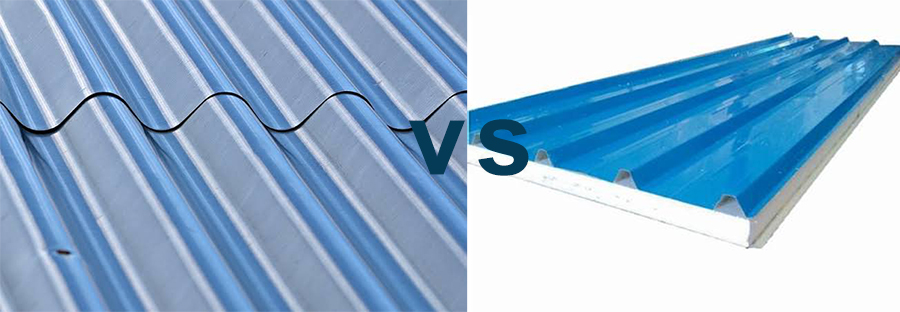
Assessed from the standpoint of building lifecycle performance and functional criteria, insulated sandwich roof panels have emerged as the definitive solution for modern industrial applications. Due to their superior thermal resistance, these panels serve as the primary building envelope for facilities requiring stringent environmental controls, including cold storage infrastructure, biopharmaceutical plants, microelectronics cleanrooms, and high-density logistics hubs. This integrated assembly substantially mitigates HVAC operational loads and systematically prevents condensation failure within the roof structure. Regarding installation efficiency, the composite three-in-one prefabricated design reduces on-site erection cycles by approximately 50 percent, delivering a decisive advantage in labor optimization. Nevertheless, empirical data indicates that conventional single-layer metal roofing retains an absolute economic advantage for unconditioned industrial structures, such as semi-enclosed agricultural facilities, bulk storage yards, and heavy industrial manufacturing plants where thermal regulation is not an operational requirement.
In conclusion, the decision between these two systems hinges on the specific thermal and budgetary requirements of the industrial facility. Metal roofing provides a highly durable, lightweight, and low-cost alternative for simple buildings that do not require internal climate control. Conversely, sandwich roof panels represent a premium, high-efficiency investment that delivers unmatched thermal performance, superior fire resistance, and faster construction speeds. While sandwich panels demand a higher initial material investment, their ability to slash long-term energy expenditures and minimize on-site labor makes them the highly preferred option for sophisticated, modern industrial operations.
For more information needed or any inquiry,please feel free to contact Yumisteel team.
years of experience



 online service
 +86-592-6095031
 manager@yumisteel.com
 Alina_Yuki
 +8613559086380+8615860744964
 English
 русский
 español
 português
 日本語
日本語