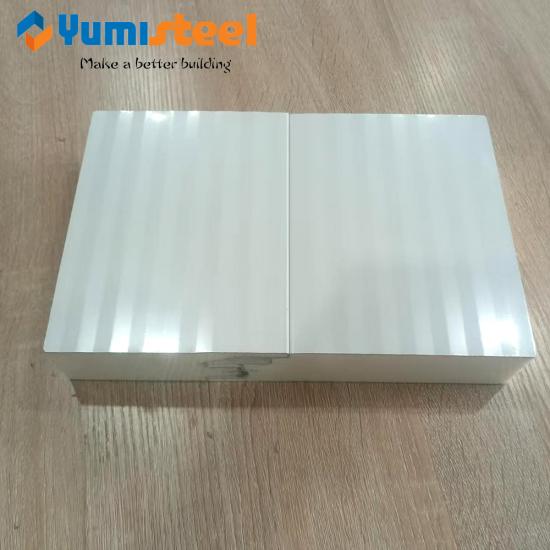

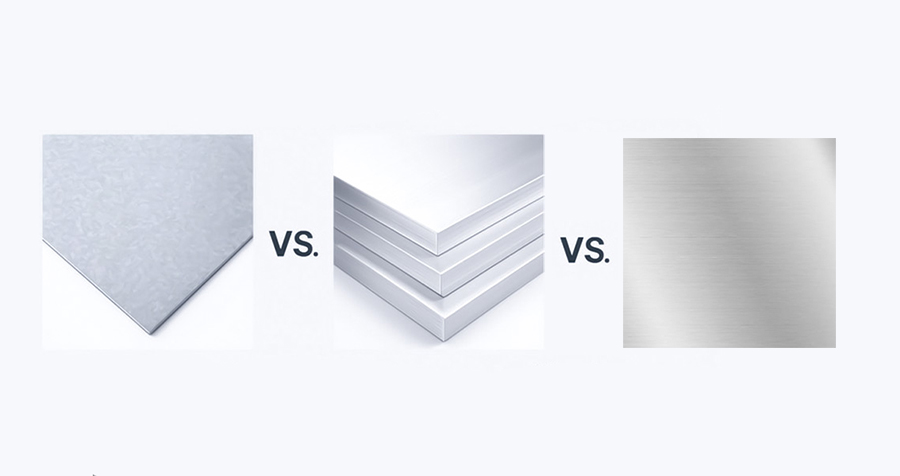
Many people focus on the "core material" when choosing a cleanroom panel, but overlook the surface steel plate, which is exposed to water, chemicals, and corrosion every day. Whether the panel is rusty or still shiny after three years depends half on the surface steel plate. What are the differences between galvanized steel, aluminized zinc steel, and stainless steel?
|
Surface Type |
Base Material |
Protection Mechanism |
Typical Grades |
Key Advantages |
Best Application |
|
Galvanized Steel |
Cold-rolled steel + pure zinc coating (both sides) |
Sacrificial anode protection (zinc corrodes first) |
DX51D+Z (verify per manual) |
Low cost, general-purpose rust protection |
Standard cleanroom environments, dry indoor areas |
|
Aluminum-Zinc Coated Steel |
Cold-rolled steel + aluminum-zinc alloy coating |
Aluminum forms dense oxide film; zinc protects cut edges |
S350GD+AZ (verify per manual) |
Superior atmospheric corrosion resistance vs. galvanized |
Humid or high-temperature differential areas |
|
Stainless Steel |
Steel alloy with chromium (≥10.5%) |
Passive chromium oxide film (self-healing) |
304, 316L (verify per manual) Excellent chemical resistance; |
316L adds molybdenum for chloride/acid resistance |
High-exposure zones with frequent chemical or saline contact |
In short: galvanized steel is the most economical, aluminized zinc steel offers better resistance to environmental corrosion, and stainless steel is the "maintenance-free" option.
|
Surface Type |
Coating / Specification |
Typical Range |
|
Galvanized Steel |
Zinc coating weight (g/m²) |
Z100 – Z275 |
|
Aluminum-Zinc Coated Steel |
Aluminum-zinc coating weight (g/m²) |
AZ100 – AZ185 |
|
Stainless Steel |
Grade + surface finish (not coating weight) |
304 / 316L with 2B or BA finish |
Two points to note: Coating weight and plate thickness are two different concepts. Both must be clarified when inquiring about prices; don't be misled by claims of "same thickness." Food and pharmaceutical workshops also have food safety-grade coating requirements (e.g., meeting relevant food contact material standards), so you can't just look at the steel plate itself.
There is no "best" steel plate, only the "most suitable": Ordinary electronics factories and packaging rooms: Galvanized steel is sufficient and offers the best cost-performance ratio.
Food processing and workshops with acidic or alkaline cleaning
Prioritize aluminum-zinc or stainless steel; for areas with frequent rinsing, use 304 stainless steel directly.
Pharmaceutical sterile core areas (Grades A/B)
Use electrolytic steel or stainless steel that can withstand disinfection (alcohol, hydrogen peroxide), with surfaces that can be frequently wiped without generating dust or peeling paint.
High humidity and condensation risk areas
Aluminum-zinc or stainless steel is superior to ordinary galvanized steel, reducing the risk of edge corrosion.
Choose right, your panels stay clean for years!
For more information needed or any inquiry,please feel free to contact Yumisteel team.
years of experience



 online service
 +86-592-6095031
 manager@yumisteel.com
 Alina_Yuki
 +8613559086380+8615860744964
 English
 русский
 español
 português
 日本語
日本語