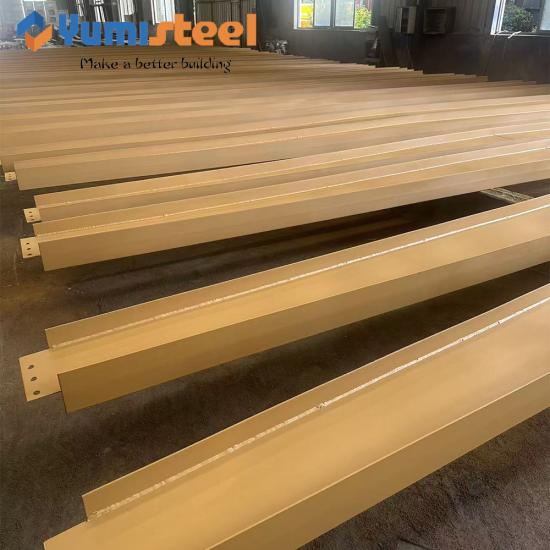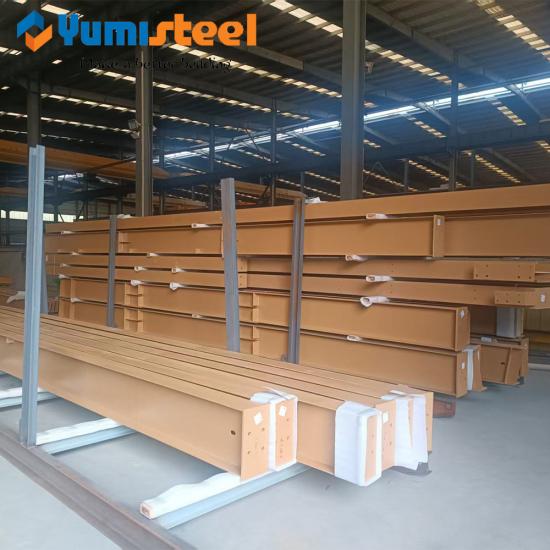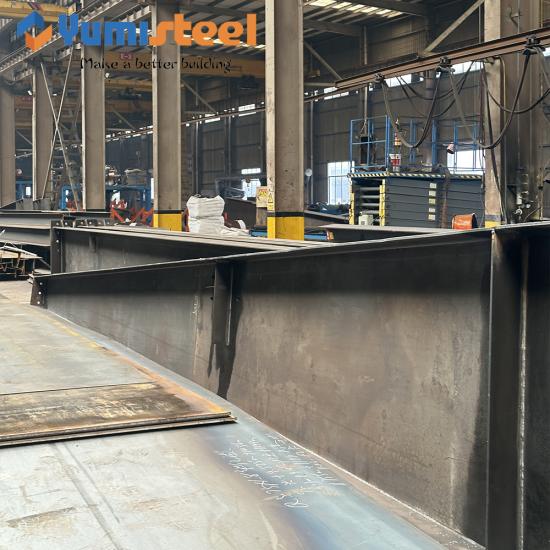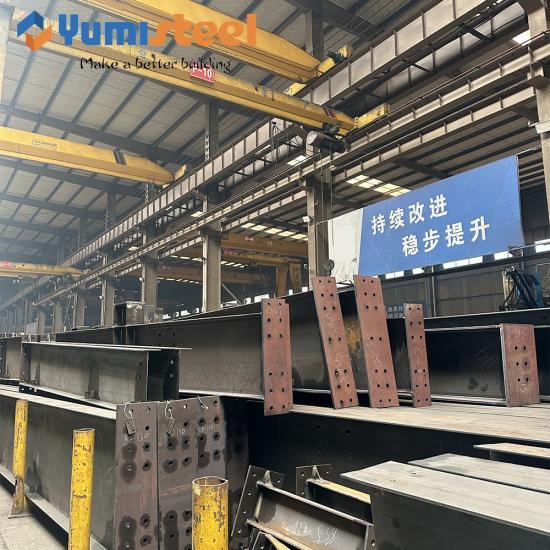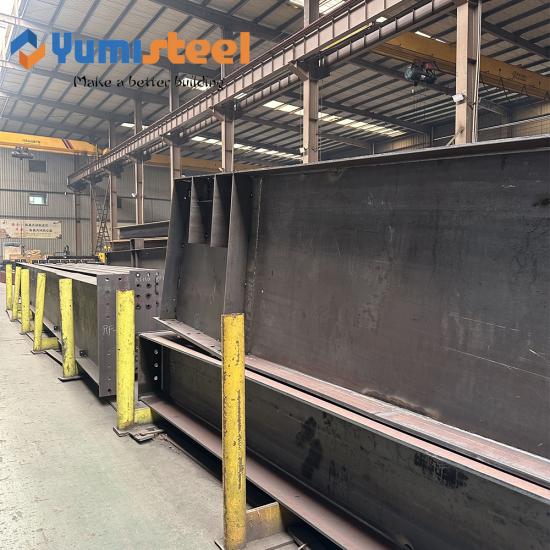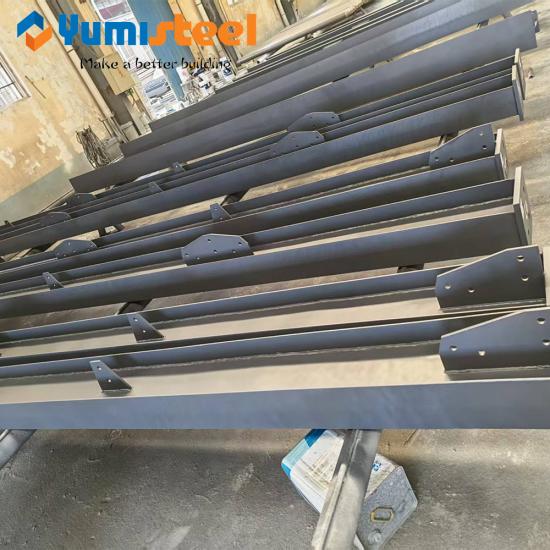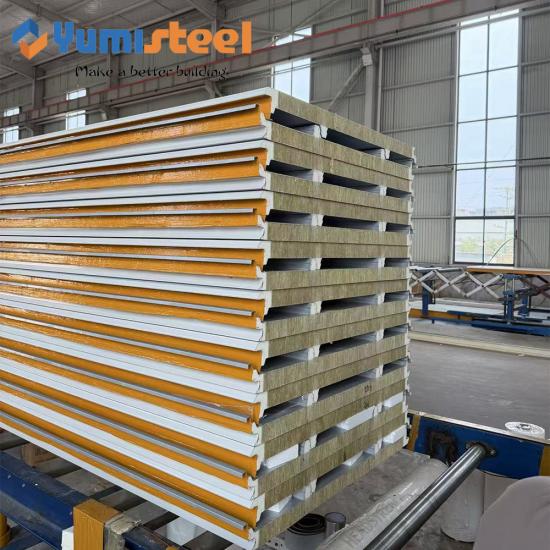

Composite beams are structural members fabricated by welding steel plates or rolled sections together to form a unified load-bearing component. These members can withstand compressive, tensile, or bending forces depending on their application in building frames, bridges, and industrial structures. The most commonly used types are I-section beams and box-section beams (both rectangular and trapezoidal). A well-designed composite beam ensures safety, serviceability, and durability throughout its service life.
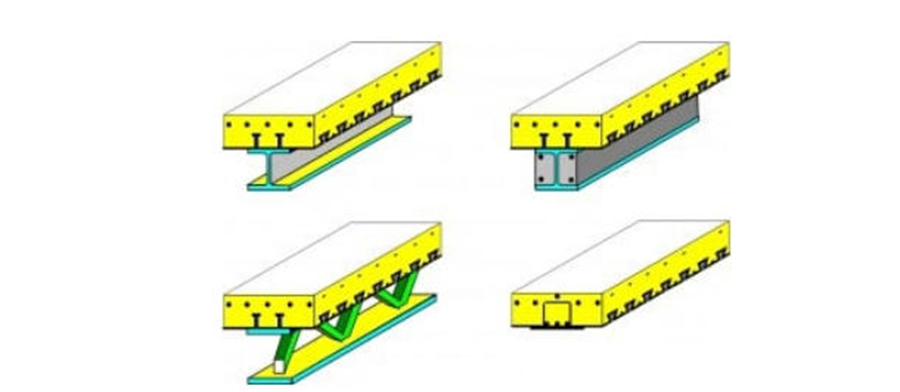
1. Types of Composite Beams
Composite beams are manufactured by joining steel plates or profiles through welding, creating a monolithic section capable of resisting various loading conditions. The two predominant configurations are I-beams, which offer excellent bending performance with economical material use, and box girders, which provide superior torsional rigidity and are available in rectangular or trapezoidal cross-sections. Box girders are particularly favored in long-span applications and curved bridge decks due to their closed-cell geometry.
2. Design Criteria for Composite Beams
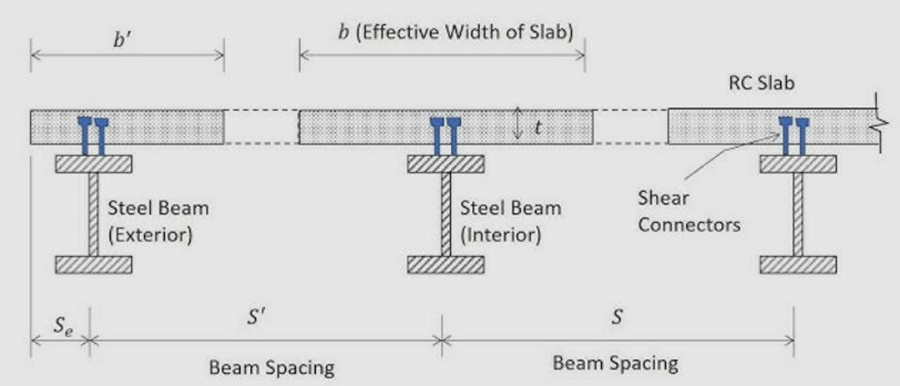
Designing a composite beam requires rigorous calculation of three fundamental properties: strength, stiffness, and stability, all of which must fully comply with relevant design codes. Strength refers to the beam's capacity to resist failure under applied loads without permanent deformation or fracture. Stiffness measures the beam's ability to resist elastic deflection under service loads, ensuring that deformations remain within acceptable limits for occupant comfort and structural integrity. Stability encompasses both global stability (resistance to lateral-torsional buckling) and local stability (resistance to buckling of individual plate elements). Key sectional properties that influence these behaviors include cross-sectional area, moment of inertia, and section modulus.
3. Stiffeners in Composite Beams
Composite beams are often reinforced with stiffeners to enhance local stability. These stiffeners are classified as transverse stiffeners (vertical), longitudinal stiffeners (horizontal), and short stiffeners, each serving specific purposes at different locations along the web and flanges. For box-section composite beams, global stability is governed by the height-to-width ratio, which should not exceed 3. For H-section or I-section beams, global stability is controlled by the span-to-depth ratio. Local stability of the web plate is ensured by limiting the web height-to-thickness ratio, while for I-beams, the compression flange's local stability is maintained by restricting the ratio of its free overhang width to thickness. In box beams, the compression flange's local stability is similarly controlled by the flange width-to-thickness ratio.
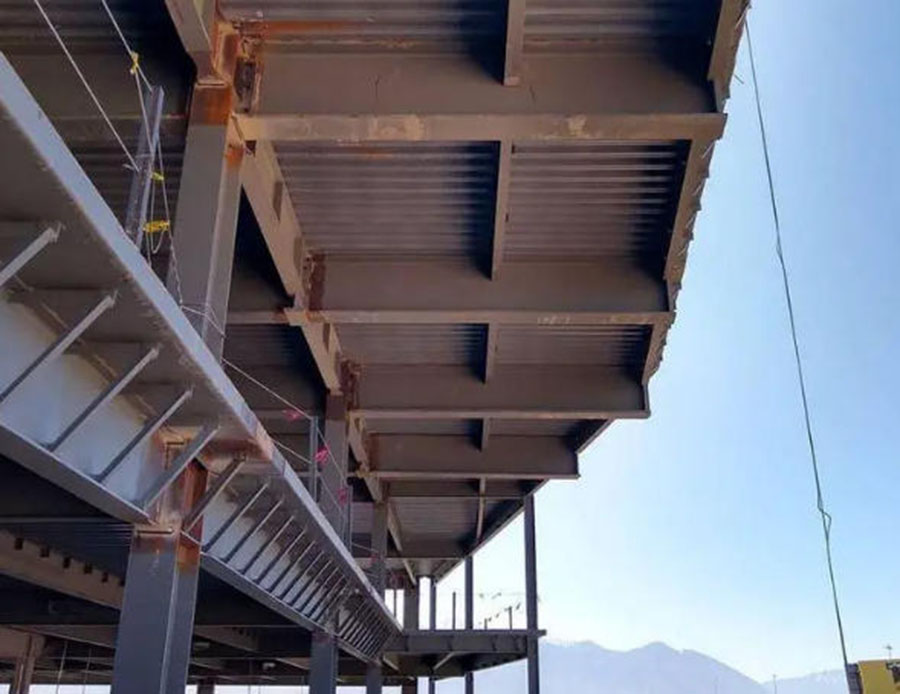
Understanding the design principles of composite beams is essential for engineers working on steel structures, from high-rise buildings to long-span bridges. By carefully selecting the appropriate beam type,whether I-section or box-section—and thoroughly verifying strength, stiffness, and stability, designers can create safe and efficient structures. The strategic placement of stiffeners further ensures that both web and flange elements resist local buckling, while global stability criteria prevent overall structural failure. A comprehensive approach to these principles guarantees that composite beams deliver reliable performance under diverse loading scenarios, making them indispensable in modern construction engineering.
For more information needed or any inquiry,please feel free to contact Yumisteel team.
years of experience



 online service
 +86-592-6095031
 manager@yumisteel.com
 Alina_Yuki
 +8613559086380+8615860744964
 English
 русский
 español
 português
 日本語
日本語