
In construction, the smallest components often bear the greatest responsibility. Nuts secure steel frames, bridges, and high-rise buildings, yet they are frequently overlooked. From basic hex nuts to specialized locking designs, understanding the 20 standard types is essential for structural engineers and construction professionals. Selecting the wrong nut can compromise load capacity, joint stability, and long-term safety. This guide divides these 20 nuts into three categories: structural, locking, and specialty fasteners for building and infrastructure projects.
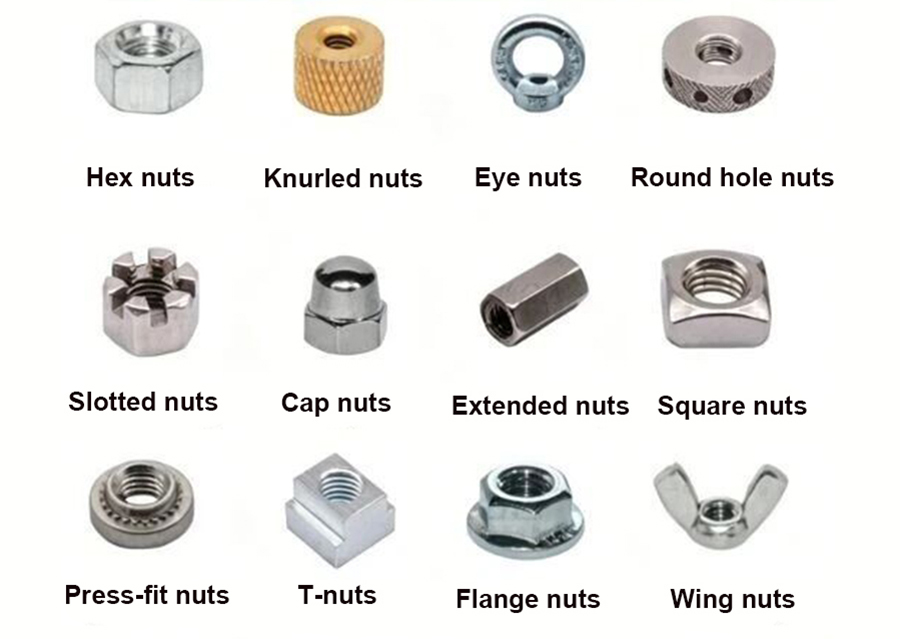
Structural nuts form the foundation of steel construction. The heavy hex nut is the most common choice for structural steel, offering extra thickness and a wider body to distribute clamping force over larger areas, ideal for skyscrapers and bridge joints. The square nut, though older, is still useful in timber framing and track anchoring due to its broad bearing surface that resists sinking into wood. The flange nut features a built-in washer-like base, saving assembly time and reducing parts on large sites. The coupling nut joins threaded rods end to end, essential for tensioning systems and concrete formwork. The cap nut protects exposed bolt ends from weather and corrosion, making it valuable for outdoor railings and exposed connections.
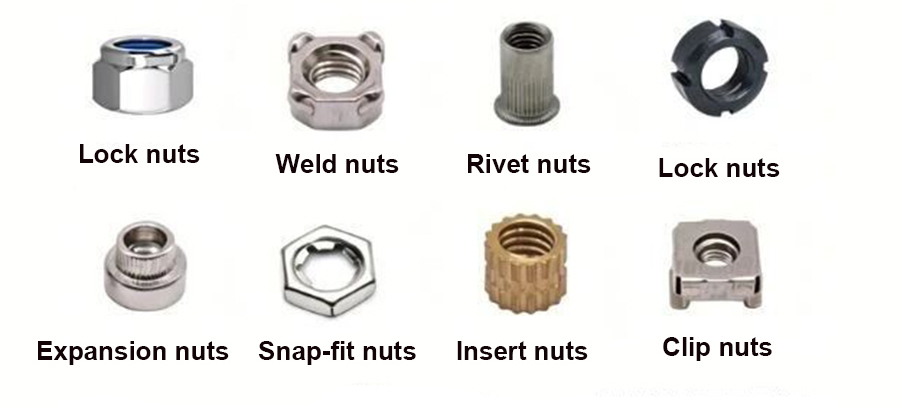
Vibration from wind, traffic, and machinery constantly threatens bolted joints. Locking nuts prevent loosening under dynamic loads. The nylon insert lock nut uses a polymer ring to grip threads, widely used in steel frames with moderate vibration. For high-temperature environments like industrial chimneys, the all-metal lock nut offers the same effect without plastic. The castle nut and slotted hex nut are secured with cotter pins, offering absolute mechanical locking for critical joints such as crane anchor bolts and bridge hangers. The keps nut speeds up installation with a built-in lock washer, while the two-way lock nut tightens under increased tension, ideal for heavy equipment foundations.
Specialty nuts solve unique construction challenges. The tee nut embeds into wooden formwork and concrete inserts, with prongs that prevent rotation. The weld nut fuses to steel plates via spot welding, providing threads where backside access is impossible, commonly used in prefabricated steel components. The wing nut and thumb nut enable hand-tightening for temporary scaffolding and adjustable supports. The split nut allows quick assembly without rotating, useful for scaffolding systems requiring rapid height changes. From towering skyscrapers to underground tunnels, these 20 nuts ensure every connection is secure, reliable, and built to last.
For more information needed or any inquiry,please feel free to contact Yumisteel team.
years of experience



 online service
 +86-592-6095031
 manager@yumisteel.com
 Alina_Yuki
 +8613559086380+8615860744964
 English
 русский
 español
 português
 日本語
日本語