

Beams are core structural components supporting buildings or structures, bearing loads from the foundation, exterior walls, or other components. Beams can be classified by shape, such as I-beams, L-beams, and box beams, and also by material and connection method. Among the many types of beams, H-beams and I-beams are the two most common forms in steel structures. They look similar and are often used in the same applications, but there are key differences in their cross-sectional shape, mechanical properties, and load-bearing efficiency. Understanding these differences is crucial for structural design and cost control.
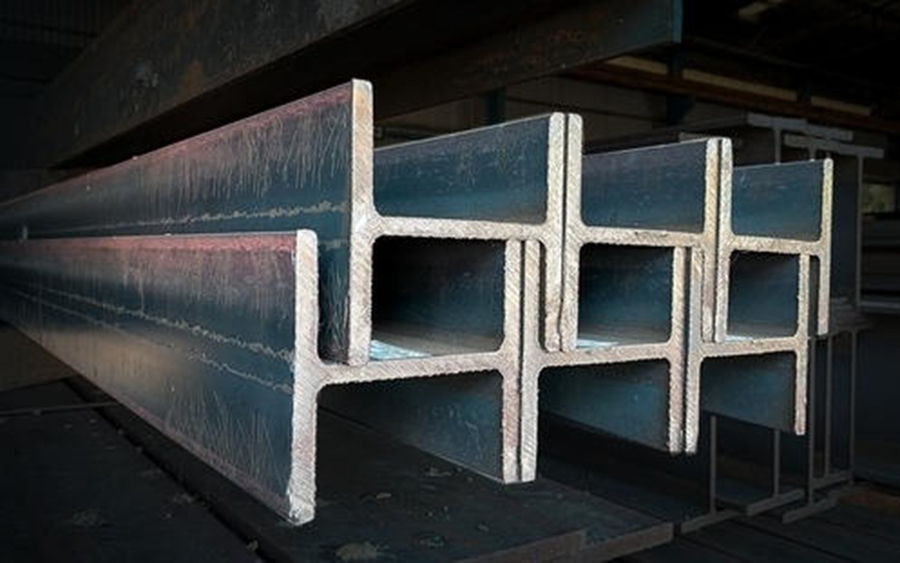
From a Cross-Sectional Perspective
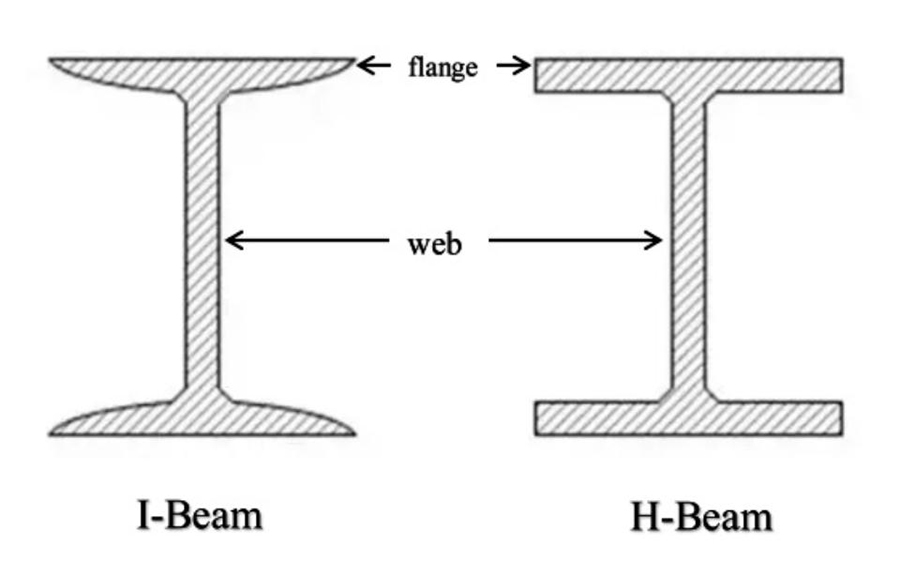
The main difference between H-beams and I-beams lies in their cross-sectional shape. An H-beam's cross-section resembles the letter "H," with one vertical flange and two long side flanges; while an I-beam's cross-section resembles the letter "I," with one vertical web (thickest at mid-span), two webs, and no bottom flange. Furthermore, the web of an H-beam is much thicker and deeper than that of an I-beam; a thicker web means a more robust beam, which is the most fundamental morphological difference between the two.
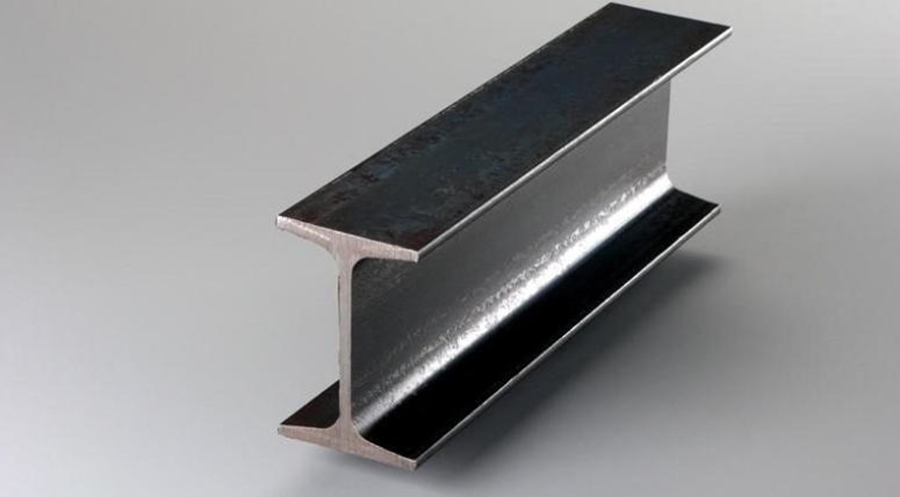 From a mechanical performance perspective
H-beams are more efficient than I-beams, better able to withstand bending and shear loads. Their thicker and deeper webs allow them to better support the weight above and balance future cantilever loads (such as additional floors or beams). Simultaneously, H-beams have a higher section modulus (stronger resistance to compressive forces) and higher tensile strength (less prone to bending under tension). In short, greater load-bearing capacity means that fewer H-beams can be used to provide the same structural support, thus reducing the cost of H-beams compared to I-beams.
From a load-bearing efficiency perspective
H-beams are significantly more efficient than I-beams. Due to their thicker and deeper webs and wider flanges, H-beams perform better under bending and shear loads, while better balancing future cantilever loads (such as additional floors or beams). Higher section modulus and tensile strength give them greater resistance to both compression and tension. In short, fewer H-beams are needed to achieve the same structural support. Therefore, H-beams not only have higher load-bearing efficiency but also lower overall cost than I-beams.
From an application perspective
H-beams and I-beams are very similar, but their applications differ. H-beams are better suited for supporting floor slabs and roof loads, and are used for larger spans; while I-beams are better suited for supporting the weight of walls or columns. Furthermore, the minimum spans of the two types of beams differ: if the project has a large span (i.e., a long length), I-beams may not be suitable because they require more material than other types of beams. Consulting professionals is key to determining the optimal selection.
Comparison Table of H-beams and I-beams
|
Items |
H-beams |
I-beams |
|
Rolling process: |
Manufactured through multiple cold and hot rolling processes. H-beam rolling mills allow for precise control of their dimensions and shape. H-beam polishing machines can remove surface defects or improve surface smoothness. |
Primarily produced using hot rolling processes for large-scale production. During production, any bending or torsion of the I-beams is corrected to ensure their flatness and straightness. A punching machine is used to quickly punch holes in the flanges or web of the I-beams, facilitating the assembly and connection of the steel structure. |
|
Applications: |
Suitable for high-precision construction and heavy industrial projects. Commonly used in bridges, large building structures, and high-stress facilities. |
Commonly used in steel structure buildings and conventional construction projects such as supporting beams. |
While H-beams and I-beams may look similar, they differ significantly in cross-sectional shape, mechanical properties, load-bearing efficiency, and application scenarios. H-beams have thicker webs and wider flanges, resulting in higher load-bearing efficiency, making them suitable for large spans and vertical loads, and offering lower overall cost under the same support conditions. I-beams, on the other hand, are better suited for supporting walls and columns, and due to their lateral force resistance, they are often used in large buildings to resist wind and seismic loads. Appropriate selection requires consideration of the project's actual span, load type, and budget, and consultation with a structural engineer is necessary when needed. Understanding the differences between these two types of beams is a crucial step in optimizing steel structure design and controlling costs.
For more information needed or any inquiry,please feel free to contact Yumisteel team.
years of experience



 online service
 +86-592-6095031
 manager@yumisteel.com
 Alina_Yuki
 +8613559086380+8615860744964
 English
 русский
 español
 português
 日本語
日本語