
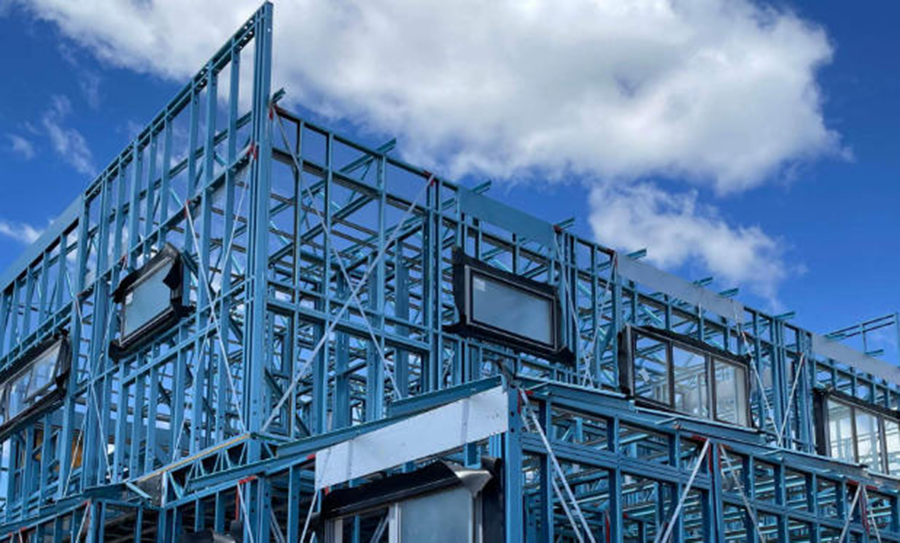
In the monsoon rain forests of Southeast Asia, windy coastal areas, or inland areas that are humid all year round, moisture and rain are not only weather characteristics, but also the fundamental forces that shape the life of buildings.For prefabricated steel structure buildings, the challenges here are clear and serious: pervasive moisture accelerates the electrochemical corrosion of steel, and severe temperature differences condense water beads on the metal surface and inside the envelope, and the synergy between the two quietly erodes the integrity and thermal insulation performance of the structure, putting long-term durability to the test.
What design is the key to ensuring the life of the building?
1. Anti-corrosion design
In wet places, steel is most afraid of rust.We must put on a full range of “armor” for it.
1.1. Wear two layers of "protective clothing"
The first layer: close-fitting "sacrifice armor" (hot-dip galvanized)
After all the steel components are done, take a “zinc bath” and coat it with a layer of zinc.This layer of zinc has a great ability: if the “armor” is scratched to reveal the steel, it will “actively sacrifice” itself before the steel rusts, thereby protecting the steel inside from harm.
The second layer: strong "outer coat" (high-performance coating)
Outside the galvanized layer, three more layers of special paint are applied, just like putting on a sturdy raincoat.
▪Primer (epoxy zinc-rich paint): Firmly grasp the galvanized layer to form a solid foundation.
▪Intermediate paint (epoxy cloud iron paint): Like a thick layer of "armor sheet", it further isolates moisture and corrosion.
▪Topcoat (polyurethane paint): The outermost "sunscreen and rainproof layer", which is not only beautiful, but also resistant to sun exposure and rain erosion.
1.2. Focus on protecting "weak links"
The joints and corners of buildings, like the armpits and necklines of clothes, are the most prone to water and moisture.So we have to:
▪Thicken protection: Brush a few more layers of paint in these places to make it thicker.
▪Do a good job of sealing: Use a good sealant to block the gap and prevent water from getting in.
▪Avoid dead ends in design: Try not to design nooks and crannies that are easy to accumulate water and difficult to inspect and repair in the future, so as to reduce trouble from the source.
2. Drainage and waterproof design
2.1. Create a roof that "does not accumulate water"
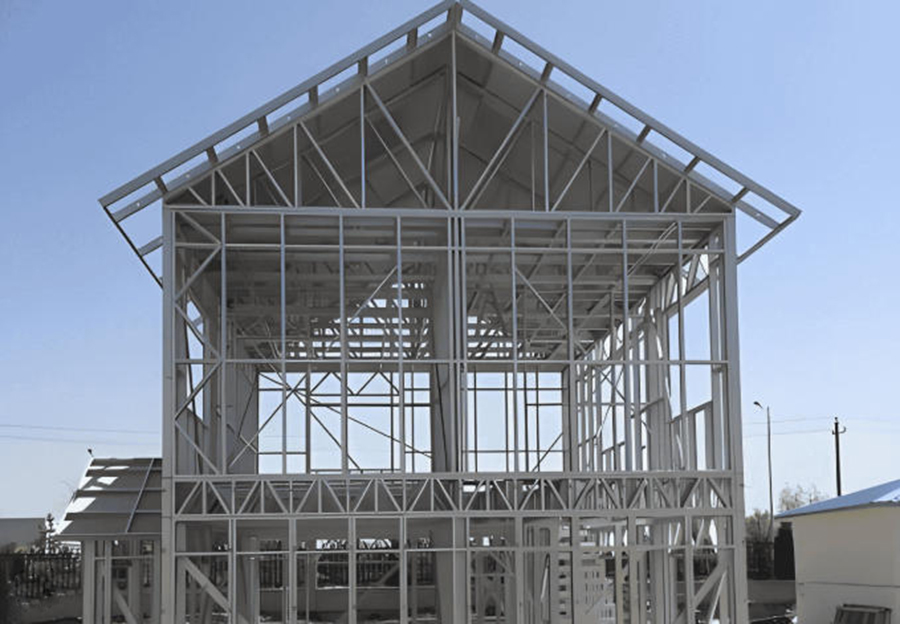
☆Make the roof steeper
▪How to do it: Make the slope of the roof steeper (it is recommended to be not less than 1:4, that is, every level advances 4 meters and the height rises 1 meter).
▪Why: The slope is too steep, and the rainwater is like a slide, flowing quickly, and it is too late to accumulate, greatly reducing the risk of water leakage.
☆Minimize the seams and seal them to the strongest
▪How to do it: Try to use long-size roof panels to reduce the seams of horizontal splicing.All the overlaps between the plates that have to exist must be tightly sealed with the best sealant.
▪Why: The fewer seams, the lower the possibility of water leakage.When the sealing is done, it is like putting waterproof tape on the seams, which are impermeable to wind and rain.
☆Choose a ”safer" roof system
▪How to do it: Give priority to the vertical seam bite roofing system.
▪Why: The seams of this system are upright and locked by mechanical bite, just like the vertical buckles of our clothes, which are much more weatherproof than ordinary flat-stacked boards (as simple as tiles), and can effectively prevent rainwater from being blown into the joints by the wind.
2.2. Plan a set of "big appetite" drainage channels
☆Drainage ditches and downspouts should be "big enough and strong enough"
▪How to do it: Design according to the maximum amount of rain, and use gutter and downspout pipes of sufficient size.Install them firmly and make sure that the water is eventually directed away from the foundation of the building.
▪Why: When it rains heavily, a lot of rain will flow from the roof instantly.The drainage system must be “edible", otherwise the water will overflow.Diverting water away from the foundation can protect the foundation from erosion and soaking.
☆Dead knock "details waterproof"
▪How to do it: You must spend a lot of effort to deal with the seams of all penetrating parts of the roof, such as:
The junction of the roof and the gable
Where vents, chimneys, and pipes come out
▪Why: These places are the most fragile "hole eyes" of the entire waterproof layer, and most of the water leaks occur here.Using high-quality waterproof materials and fine craftsmanship to completely seal these nodes is the top priority of waterproofing.
3. Anti-condensation and ventilation design
The water vapor in the humid air is like an invisible trouble, and it will condense into drops of water when it touches the cold steel structure.This will cause internal rust, mold, and failure of the insulation layer.
3.1. Indoor side: stick a "waterproof vapor plastic film"
▪What to do: On the inside of the insulation layer (facing the indoor side), a complete and undamaged vapor barrier layer must be laid.
▪Why: This membrane can effectively block indoor warm and humid air (such as water vapor from human breathing and cooking) from penetrating into the internal cavity of the wall or roof, and prevent condensate from forming in it from the source.
3.2. Insulation and ventilation: cooperate inside and outside to "please out" moisture
☆Choose insulation materials that are “not afraid of moisture”:
▪What to use: B1 grade or higher polyurethane/rock wool sandwich panels are preferred.
▪Why:
|
Polyurethane |
The interior is a closed "small bubble" structure, which hardly absorbs water, and the thermal insulation performance can be maintained stably in humid environments. |
|
Rock wool |
It is a grade A non-combustible material, which has strong hydrophobicity and is not susceptible to moisture. |
Both can maintain reliable thermal insulation effect for a long time in a humid environment and prevent cold bridges from forming.
☆Let the air flow and take away moisture:
▪Natural ventilation (commonly used to save money): Using the principle of ”hot air rising", install a ventilator (air outlet) on the roof and leave an air inlet under the eaves.In this way, a continuous air flow can be formed, and the hot and humid air accumulated under the roof can be naturally discharged.
▪Mechanical ventilation (necessary for high-humidity environments): For workshops, warehouses and other places where a lot of moisture will be generated inside, forced exhaust fans must be installed to actively and forcefully draw out the humid air and strictly control the indoor humidity.
4. Selection of materials and details
☆Small parts, large parts (connector)
All small parts such as bolts and self-tapping screws used must be made of hot-dip galvanized or stainless steel.Don't let these little things rust first, otherwise no matter how strong the main structure will be, it will loose and go wrong.
☆Put on “waterproof boots” for the wall (wall structure)
At the bottom of the wall, next to the ground, build a 30-60 cm high concrete wall foot.It can be like a boot, blocking moisture returning from the ground, as well as mud splashed by rain, and directly protecting the steel plate wall above from moisture corrosion.
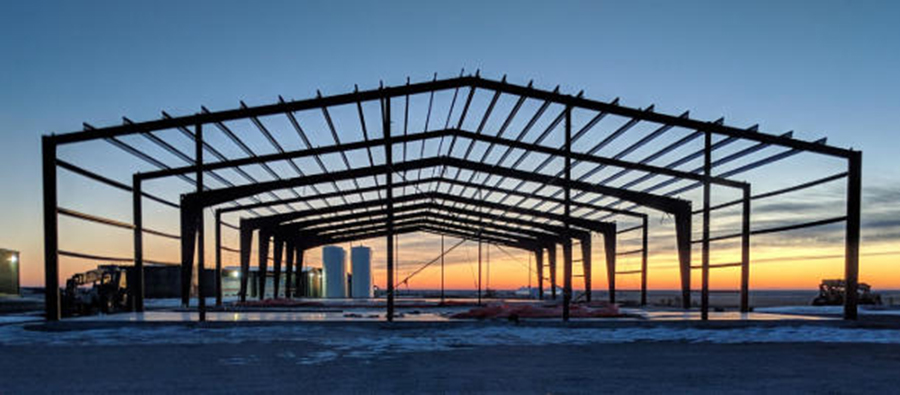
Under the eternal test of moisture and rain, the long-term standing of a prefabricated steel structure building is by no means a victory of a single material, but the result of a systematic defense throughout.It begins with a fundamental design philosophy: the building itself is regarded as an organic life system, and its bones (anticorrosive coating), skin (drainage and waterproof) and respiratory system (anti-condensation and ventilation) must work together to fight the invasion of moisture.
If you have any questions,please contact the Yumisteel team for tailored solutions!Thank you!
years of experience



 online service
 +86-592-6095031
 manager@yumisteel.com
 Alina_Yuki
 +8613559086380+8615860744964
 English
 русский
 español
 português
 日本語
日本語